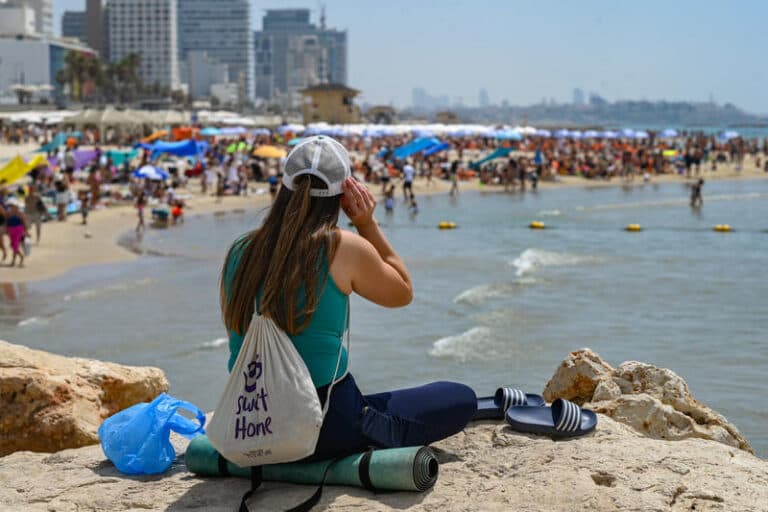

Israeli is a happy, resilient nation. People enjoy the beach in Tel Aviv, despite war and grief, April, 2026. Photo by Avshalom Sassoni/Flash90
Takeaways
- More people live in the Gaza Envelope now than before October 7.
- Countless IDF widows have remarried.
- Most Holocaust survivors built full lives. Trauma doesn’t always win.
- Hundreds of couples got married in bomb shelters. Life didn’t stop.
Since October 7th, 2023, Israel has buried more than 2,000 of its own: civilians massacred in their homes and kibbutzim, and soldiers killed in the war that followed. Thousands more came home wounded, physically, psychologically, or both. Entire communities were wiped off the map overnight. The wait for hundreds of hostages to be sent home kept Israelis in a two-year chokehold.
Ordinarily, you’d picture a people and a nation crushed under the weight of it. Depleted. Too grief-stricken to think about tomorrow, let alone build one. A nation just trying to get through the day.
But that’s not what happened in Israel.
How Israeli Communities Actually Rebuild After War (It’s Not What You Think)
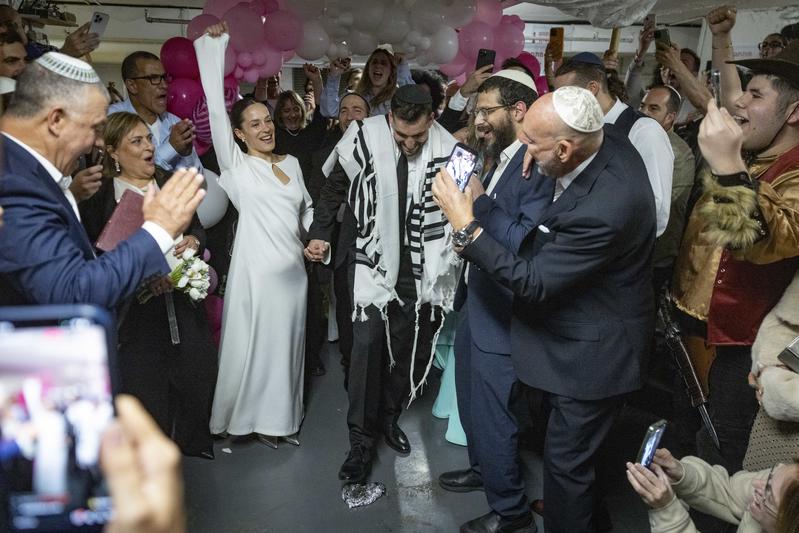
I came across a detail recently that stopped me mid-scroll. During the height of the Iran conflict (February, 2026), Israelis held hundreds of weddings underground. Parking structures. Bomb shelters. Families and friends, dressed to the nines, dancing with no abandon while interceptions between Israel’s iron dome and Iranian ballistic missiles boomed overhead. That image hasn’t left me.
It reframed the whole way I was thinking about what recovery actually means.
The Number That Matters Most
Everyone fixates on destruction statistics. How many homes. How many displaced. The number I keep returning to is different: the Gaza Envelope now has 65,000 residents. As you know, the Gaza Envelope are the Jewish communities surrounding Gaza and they bore the first and worst of the October 7th massacre. Before the attack, it had 62,000.
More people live there now than before? What? Over 90% of original residents returned, and more than 3,000 new inhabitants joined them.
Think about that for a second. These aren’t people who didn’t know what had happened. They knew exactly. They came back anyway, and some came for the first time.
That’s not a statistic. That’s a decision made by tens of thousands of individuals, presumably at kitchen tables and in long conversations with partners and parents, choosing the place that had been attacked over everywhere else that hadn’t. The Israeli’s superpower is their resilience.
IDF Widows Remarry: A Message of Strength
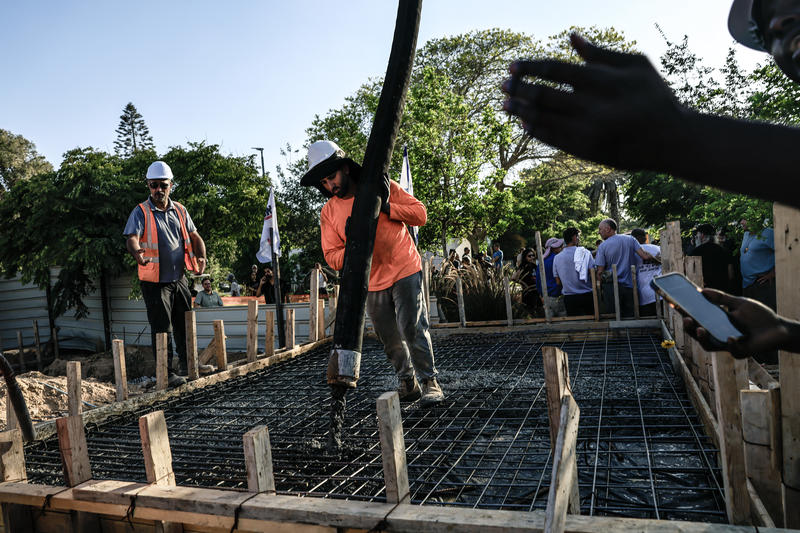
Though we don’t know the official number, we know that hundreds of IDF widows have recently embraced new love and remarried. They transformed profound grief into renewed hope and family life. They built second chapters filled with joy.
Each remarriage shows a widowed woman’s courage to move forward. Every new family formed strengthens the nation’s fabric.
📖 For a deeper look at how Israel took security matters into its own hands, read here about how Israel’s civilians volunteer to keep the country safe.
The Longer Story
Holocaust survivors were told, for a long time, that their defining experience was trauma. Chronic, irreversible, passed down. The research has complicated that picture significantly.
Most survivors in Israel did not develop chronic PTSD. Over 100,000 Holocaust survivors live in Israel today. They built families, contributed to a country, and made something out of what was left.
Their children, the second generation, carry the weight of that history, yes. But they also carry something else. Resilience. Trauma doesn’t resolve neatly. But it does, sometimes, transform into something functional. The research calls it post-traumatic growth.
Back to the Parking Garage
I keep thinking about those wedding guests. Mothers in their finest clothing, sitting on folding chairs under fluorescent lights, watching someone’s child get married because the date wasn’t going to move for a war. There’s something almost stubbornly ordinary about it. The caterers still showed up. Someone still cried during the vows.
This personal resilience mirrors Israel’s broader recovery story. Holocaust survivors rebuilt families. Gaza Envelope residents returned home. Widows remarrying and couples marrying in parking garages embody the same unwavering spirit defining Jewish survival.
Want to keep reading? Learn about this October 7th survivor keeps strong and keeps faithful. Explore more on faith, values, and the Land of Israel at Sinai Project.
Discussion0
No comments yet — be the first to share your thoughts.