Five Tankers Reportedly Attacked Near Hormuz
OSINT sources report five tankers were attacked near the Strait of Hormuz, raising new concerns for U.S. deterrence, Gulf energy routes, and Israel’s security

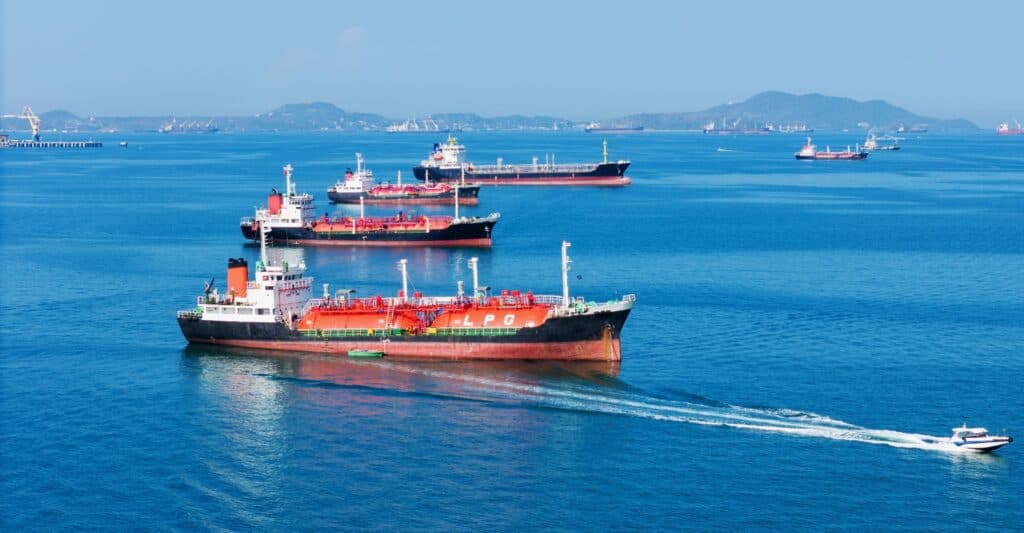
Hormuz tanker attacks were reported by OSINT sources over the past 24 hours, raising new concerns over maritime security near Oman.
According to the OSINT report, five tankers passing through the Omani shipping route in the Strait of Hormuz were attacked.
Three of the five tankers have reportedly been identified by name.
The listed vessels are the Qatari-owned gas tanker Al Rekayyat, the Saudi-owned oil tanker Wedyan, and the Emirati-owned gas tanker Al Maryah.
One additional tanker was reportedly attacked in the last few hours and has not yet been identified. Another vessel was reportedly damaged, though the incident has not yet been publicly reported.
The Tanakh says, “Those who go down to the sea in ships, who do business on great waters, have seen the works of the Lord.” In Hormuz, the sea is not only a trade route. It is a battlefield for energy, deterrence, and regional power.
Hormuz Tanker Attacks Raise Alarm
The Strait of Hormuz is one of the world’s most important energy corridors.
A series of attacks there affects far more than the ships themselves. It threatens oil markets, liquefied natural gas shipments, insurance costs, military planning, and the credibility of the current ceasefire framework.
The Omani shipping route has become especially important because vessels have tried to avoid routes closer to Iranian-controlled areas.
If tankers are being attacked on that route as well, then the risk map changes quickly.
According to the OSINT report, the United States had not yet responded to the attacks at the time of the update.
Impact For America And Israel
For the United States, the attacks test deterrence.
If Iran or Iranian-linked forces can strike tankers from Qatar, Saudi Arabia, and the United Arab Emirates, Washington faces pressure from several Gulf partners at once.
The U.S. also faces an economic risk. Hormuz disruptions can raise energy prices, increase shipping costs, and create pressure on global markets.
For Israel, the impact is strategic.
Iran uses maritime pressure the same way it uses Hezbollah, Hamas, the Houthis, and militias across the region: to make the cost of confronting Tehran feel global.
That concern gives new weight to “Strait Of Hormuz Shipping Begins To Return.” Shipping through the Strait of Hormuz had begun rising again under the U.S.-Iran ceasefire, but mines, dark voyages, and IRGC threats still left major risks for America and Israel.
The reported tanker attacks show how fragile that return may be.
If ships cannot safely move through the Omani route, then the ceasefire has not restored security. It has only created a narrow pause under threat.
A Shared Moral Calling
The United States and Israel both need open sea lanes, reliable deterrence, and a regional order that does not allow terror regimes to hold global trade hostage.
The United States and Israel also share a covenantal understanding before God.
America’s covenantal tradition is rooted in liberty under God, ordered justice, and the belief that power must serve moral purpose. Israel’s covenant is older and unique, rooted in God’s promise, Jewish peoplehood, Torah, and the return to the land of Israel.
Those covenants are not identical. However, they meet in a shared calling: defend freedom, protect innocent life, and resist regimes that use violence to control others.
In this story, that shared calling means defending the freedom of navigation. It means refusing to let Iran or its network decide which countries may trade, export energy, or support the United States.
For Israel, that duty includes confronting the same Iranian system that threatens its borders. For America, it includes protecting Gulf partners, global commerce, and the credibility of U.S. deterrence.
The reported attacks near Hormuz are therefore not only a maritime incident. They are a warning that the ceasefire remains unstable, the shipping route remains exposed, and Iran’s pressure campaign still threatens both America and Israel.
For more stories on Israel, faith, and the values behind the headlines, follow Sinai on Facebook and Instagram.
Discussion0
No comments yet — be the first to share your thoughts.