

Hebrew terms. | Photo: Shutterstock
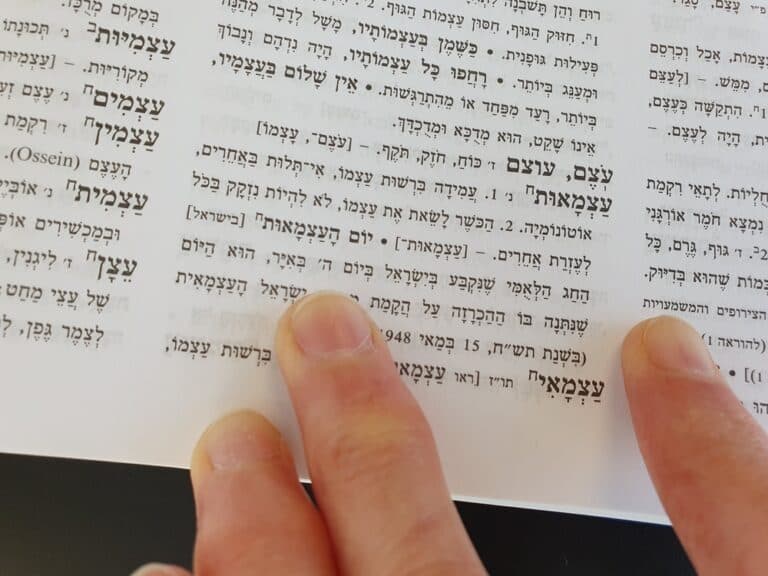
Here’s a helpful list of Hebrew terms that you will find in our articles.
Shabbat: The Jewish Sabbath, observed from Friday sunset to Saturday nightfall. Shabbat is a positive biblical commandment and it is observed in some way by most of the Jewish population.
Yom Tov: Jewish holiday or festival. It literally means ‘good day’ and is associated with the three pilgrimage festivals found in the Bible— Pesach (Passover, or the Feast of Unleavened Bread), Shavuot (the Feast of Weeks), and Sukkot (the Feast of Booths)
Mishna: The Oral Law written down by Rabbi Judah the Prince in the 3rd century in Israel. Jewish tradition sees the Oral Law as the sister to the Written Law, both handed down my Moses at Sinai, one written, one told.
Talmud: A vast collection of Jewish law and tradition which includes legal writings, interpretations of the Oral Law, ethical lessons, and stories. The Talmud was compiled in Babylonia (modern day Iraq) by great Rabbinical luminaries of the 6th and 7th centuries and is the authoritative work on Oral Law to this day.
Hashem: Literally “The Name,” a respectful way to refer to God without using His actual name. Since there is a biblical commandment to take the name of God in vain, many observant Jews do not even utter any form of His name and choose instead ‘Hashem’.
Mitzvot (plural of Mitzvah): Religious obligations or commandments in Judaism. The Bible uses the word Mitzvah in describing God commanding humans to fulfill His will. Jews live ‘a mitzvah life’, and incorporate it into every aspect of life.
Torah: The first five books of the Hebrew Bible, Genesis, Exodus, Leviticus, Numbers, Deuteronomy. The word Torah actually means ‘the teaching’. It is also known as the Five Books of Moses.
Chutzpah: A Yiddish word meaning audacity, nerve, or extreme self-confidence.
Shul: A Yiddish word for synagogue or Jewish house of worship.
Kashrut: The set of Jewish dietary laws.
High Holidays: Refers to Rosh Hashanah (Jewish New Year) and Yom Kippur (Day of Atonement), the most important holidays in Judaism.
Oral Law: The oral tradition of Jewish law and custom, later written down in the Talmud.
Written Law: The Torah, or the first five books of the Hebrew Bible.
Baruch Hashem: Literally “Blessed be God,” a common Jewish expression of gratitude or acknowledgment of divine providence.
Shalom: Peace, also used as a greeting meaning both “hello” and “goodbye”.
Todah: Thank you in Hebrew.
Yehudi: A Jew or Jewish person.
Ahavah: Love in Hebrew.
Emunah: Faith or belief in Hebrew, from which the word “Amen” is derived.
Ruach: Spirit, wind, or breath in Hebrew, often used together with the Spirit of God in the Bible.

Discussion0
No comments yet — be the first to share your thoughts.