Ghalibaf Baghdad Visit Begins Beside Soleimani Statues
Reports say Mohammad Bagher Ghalibaf began his Baghdad visit beside statues of Qasem Soleimani and Abu Mahdi al-Muhandis near the airport

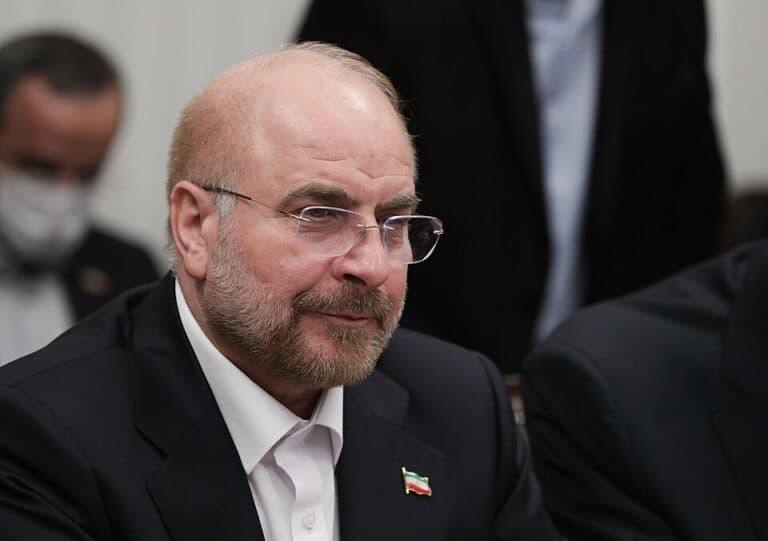
Ghalibaf Baghdad visit reports placed Iran’s parliament speaker beside some of the most symbolic figures in Tehran’s regional terror network.
Mohammad Bagher Ghalibaf, Speaker of the Iranian Parliament and head of Iran’s negotiation delegation, landed in Baghdad for an official and publicized visit, according to the report. He began the visit with a speech next to the statues of Qasem Soleimani and Abu Mahdi al-Muhandis, near Baghdad Airport.
The location carries heavy meaning. Soleimani, the former commander of Iran’s Quds Force, and al-Muhandis, a senior Iraqi militia leader, were killed in a U.S. strike at Baghdad airport during the Trump administration in January 2020.
The prophet Habakkuk warns against the man who “enlarges his desire as hell” and gathers nations to himself. That image speaks directly to Iran’s regional project. Tehran does not only send officials abroad. It builds memory sites, militia loyalties, negotiation fronts, and symbols of defiance around the men who spread its power.
Ghalibaf Baghdad Visit
Ghalibaf’s reported decision to speak beside the statues was not a neutral diplomatic gesture. It placed Iran’s parliamentary leadership inside the visual language of the “resistance axis.”
For Tehran, Soleimani and al-Muhandis are not only dead commanders. They function as symbols of Iranian influence in Iraq, Syria, Lebanon, Gaza, and beyond. By beginning the visit at that site, Ghalibaf sent a message about who Iran honors and what kind of regional order it still wants to build.
That message matters for Iraq as well. Baghdad remains pulled between state sovereignty, U.S. pressure, Iranian influence, and the power of armed Shiite militias. When a senior Iranian negotiator uses Baghdad as a stage beside militia icons, the visit becomes more than protocol.
Tehran’s Axis Speaks In Baghdad
The same Tehran axis appeared in “Hamas Disarmament Rejected By Tehran Representative.” That article reported that Hamas representative Khaled Qaddoumi said the group’s weapons would remain as long as there is “occupation,” challenging U.S.-backed Gaza disarmament efforts.
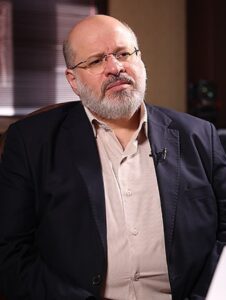
Together, the two stories show the same pattern. Iran’s allies speak from Tehran about keeping weapons in Gaza. Iran’s leaders speak in Baghdad beside statues of the commanders who built militia power across the region.
For Israel, these are not separate signals. Hamas in Gaza, Hezbollah in Lebanon, Shiite militias in Iraq, and Iran’s Quds Force legacy all belong to one strategic map. Tehran uses politics, memory, and armed proxies together.
For Washington, Ghalibaf’s reported visit also revives the significance of Trump’s 2020 strike. The killing of Soleimani and al-Muhandis did not end Iran’s regional project. However, it proved that American power could reach the men who built it.
Covenant Against The Cult Of Terror
The United States and Israel carry separate covenantal missions before God, but both reject the glorification of terror as a foundation for politics. America’s mission in the region requires defending allies, deterring militias, and proving that attacks on its people carry consequences. Israel’s mission demands vigilance against the Iranian network that surrounds the Jewish state with rockets, tunnels, drones, and propaganda.
Baghdad now shows how Iran keeps that network alive. It does not only arm militias. It sanctifies their leaders, stages official visits beside their images, and turns old battlefields into political theaters.
Ghalibaf’s reported speech near the statues should therefore be read as a message. Iran still sees Iraq as a central arena. It still treats Soleimani and al-Muhandis as models. It still links negotiation to intimidation.
America and Israel should read the symbolism clearly. Tehran’s diplomats may speak the language of talks, but its political theater still bows before the architects of regional violence.
For more stories on Israel, faith, and the values behind the headlines, follow Sinai on Facebook and Instagram.
Discussion0
No comments yet — be the first to share your thoughts.