
Hamas-Run Gaza Authorities Move To Transfer Governance
Hamas-run Gaza authorities announced steps to transfer governance to a national committee, creating a possible opening for Israel, the U.S., and postwar Gaza policy

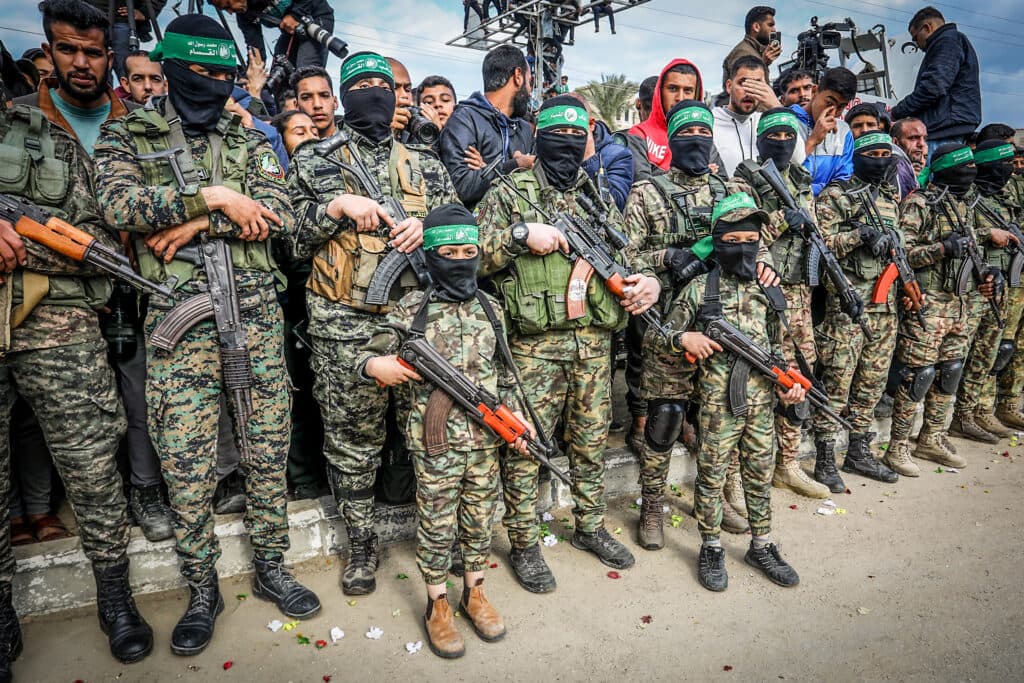
Gaza governance transfer efforts advanced after Hamas-run authorities in the Strip announced new steps toward handing civilian rule to the National Committee for the Administration of Gaza.
In a statement addressed to the Palestinian people, the Gaza authorities said they had already taken “practical steps” and repeatedly declared their readiness to transfer responsibility for governance.
They said the latest move translates that position into “concrete actions on the ground.”
The Tanakh commands, “You shall appoint judges and officers in all your gates.” That verse speaks to the basic requirement of any society: governance must serve justice, order, and life, not terror rule.
Gaza Governance Transfer Announced
According to the statement, all administrative and legal preparations for transferring the governmental system in Gaza have been completed.
The authorities said those arrangements were presented to Palestinian factions, the Higher Committee of Clans and Tribes, civil society institutions, and a United Nations observer representative.
The statement also announced that Mohammad Abdel Khaleq al-Farra, chairman of the Government Emergency Committee and acting head of government follow-up, submitted his resignation.
In addition, the Government Emergency Committee has been dissolved.
The Gaza authorities said the move reflects “absolute seriousness” and aims to facilitate the administrative transition.
They added that remaining workers inside the governmental system are technical and professional employees who will stay at their posts to prevent an administrative vacuum.
Why This Matters For Israel And America

If implemented genuinely, the move could create an opening for both Israel and the United States.
For Israel, the central issue remains Hamas control. Israel cannot accept a Gaza future in which Hamas simply changes labels while keeping weapons, security power, tunnels, and the ability to rebuild terror infrastructure.
However, a real transfer of civilian governance away from Hamas could support Israel’s goal of removing the terror group from power after October 7.
For the United States, the development could help advance a postwar framework that separates humanitarian administration from Hamas rule. That would make aid delivery, reconstruction, monitoring, and regional diplomacy more workable.
Still, Washington and Jerusalem will need proof, not announcements. Any transition that leaves Hamas with armed control would not solve Gaza’s core problem. It would only repackage it.
That moral background is impossible to separate from “Hamas Hostage To UN: I Am Living Proof Of Hamas’s Sexual Violence.” Hostage survivor Ilana Gritzewsky confronted a UN representative, saying she is living proof of Hamas’s sexual violence on October 7 and in captivity.
Her testimony explains why Hamas cannot remain Gaza’s governing force. A movement responsible for massacre, hostage-taking, and sexual violence cannot be treated as a normal civil authority.
A Shared Moral Calling
The United States and Israel share an interest in a Gaza future that no longer threatens Israeli families or empowers terror.
A genuine transition could reduce Hamas’s grip, improve civilian administration, and give regional actors a clearer framework for reconstruction. It could also strengthen American diplomacy by giving the U.S.-backed plan something concrete to build on.
The United States and Israel also share a covenantal understanding before God. Both nations, at their best, see liberty as a moral calling, not only a political system.
In this story, that shared calling means supporting governance that protects civilians instead of hiding terrorists among them. It means insisting that Gaza’s future cannot belong to a movement that built its power on death, kidnapping, and hatred of the Jewish state.
For Israel, that duty includes defending Jewish life and ensuring Hamas cannot rebuild the machinery of October 7. For America, it includes backing a postwar structure that advances stability, protects allies, and refuses to reward terrorism with political survival.
The announcement may become a positive step if it leads to real non-Hamas governance. But the test will be action: who controls the weapons, who controls security, and whether Gaza’s next administration serves civilians rather than Hamas.
For more stories on Israel, faith, and the values behind the headlines, follow Sinai on Facebook and Instagram.
Discussion0
No comments yet — be the first to share your thoughts.