Fourth Day: The Lion’s Roar Grows Louder
Over the past day and a half, Israel’s security establishment has expanded its campaign against Iranian and Hezbollah targets, striking at the heart of Tehran’s leadership while simultaneously deepening ground operations in southern Lebanon. As Operation “Lion’s Roar” enters its fourth day, the Israel Defense Forces are confronting threats on multiple fronts, determined to dismantle

Sinai Staff
Opinion contributor··4 min read
Over the past day and a half, Israel’s security establishment has expanded its campaign against Iranian and Hezbollah targets, striking at the heart of Tehran’s leadership while simultaneously deepening ground operations in southern Lebanon. As Operation “Lion’s Roar” enters its fourth day, the Israel Defense Forces are confronting threats on multiple fronts, determined to dismantle command structures directing attacks against the Jewish state and to reinforce protection for Israel’s northern communities.
In a dramatic development Tuesday afternoon, the IDF confirmed an attempted targeted strike in Tehran against a senior Iranian regime official. The intended target was Daoud Ali Zadeh, identified as the commander of the Lebanon branch of the Quds Force, the elite external operations arm of Iran’s Islamic Revolutionary Guard Corps.
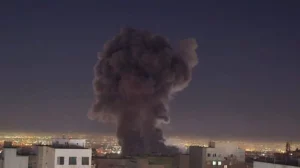
Earlier in the day, IDF Spokesperson Brig. Gen. Effie Defrin delivered a special statement from an Israeli Air Force base, revealing that Israeli aircraft had struck key security government buildings within the Iranian regime’s leadership compound in central Tehran. According to the IDF, the Air Force dropped multiple munitions on the presidential office, the building housing Iran’s Supreme National Security Council, and the central meeting facility used by the regime’s most senior security decision making forum.
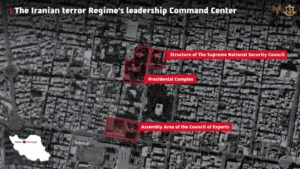
Additional targets included an institution responsible for training Iranian military officers and other operational infrastructure. Israeli officials described the compound as one of the most heavily secured sites in Iran, spanning several city blocks and serving as a frequent venue for high level deliberations, including assessments of Iran’s nuclear program and planning hostile activity against Israel.
Military officials emphasized that the strike followed a prolonged and detailed intelligence process led by Military Intelligence. They described the targeted compound as the regime’s most central command hub, and said its destruction significantly disrupts the continuity of Iran’s command and control systems.
The Hezbollah Front
The IDF responded to Hezbollah’s decision to join the war:
IDF officials stressed that Hezbollah has chosen to join the confrontation as an Iranian proxy and will bear the consequences of its actions. The army reiterated that it will not allow harm to Israeli civilians and will continue operating in every arena necessary to remove strategic threats and safeguard the people of Israel.
Israel widened its operations against Hezbollah in Lebanon. Overnight and into the morning, Israeli Air Force jets struck targets in Beirut, including in the Dahiyeh district, a known Hezbollah stronghold. The IDF later confirmed that in one of the strikes in Beirut, there had been an attempted elimination of several Hezbollah commanders.
Footage from the strike on Bierut | Video: Usage as per Section 27a of Israeli copyright law
On the ground, the IDF announced that Division 91 forces have entered southern Lebanon and are holding several key positions as part of what the military described as a reinforced forward defense posture. The move marks a significant escalation, aimed at preventing direct fire on Israeli border communities.
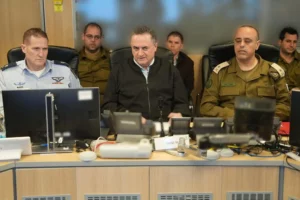
Defense Minister Israel Katz stated that he and Prime Minister Benjamin Netanyahu had authorized the army to advance and secure additional dominating terrain inside Lebanon in order to prevent Hezbollah from carrying out direct line of sight attacks on Israeli towns. “The IDF continues to operate forcefully against Hezbollah targets in Lebanon,” Katz said. “The terror organization is paying and will continue to pay a price for firing at Israel. We promised security for the communities of the Galilee, and that is what we will do.”
Throughout the morning and early afternoon, Israel also faced continued rocket and missile fire. Several barrages were launched from Lebanon toward northern communities. In one incident in the Galilee Panhandle, a rocket made a direct impact on a home. The residents were inside a protected space and were saved.
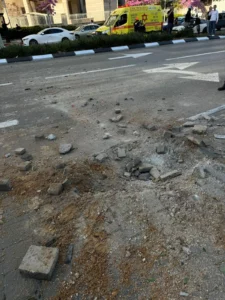
Air raid sirens were activated multiple times in the north, including in the Golan Heights, following additional rocket launches from Lebanon. Around 11 a.m., Iran launched a barrage toward central Israel. No injuries were reported, though several sites were identified where shrapnel had fallen. Rescue teams continued to scan impact areas in the center of the country, with initial assessments indicating that the damage was caused by fragments.
Later in the afternoon, additional launches from Iran were detected, prompting further sirens in central Israel and the Ashdod area.
As the operation unfolds across Tehran, Beirut, and southern Lebanon, Israel’s message is unmistakable: those orchestrating terror against the Jewish state, whether from underground bunkers in Dahiyeh or fortified compounds in Tehran, are no longer beyond reach.
Praying for Our Soldiers’ Safety
Secretary of War Pete Hegseth addressed the American troops who are fighting alongside Israeli soldiers in this war against evil. His closing words were a prayer we can all join: “May Almighty God watch over you, and His Providential arms of protection extend over you. Godspeed warriors.”
Discussion0
No comments yet — be the first to share your thoughts.