Israel Launches Eastern Border Plan With 40 Settlement Points
Israel’s Defense Ministry established the Eastern Region Directorate to advance 40 settlement points along the eastern border and strengthen security against future threats


Israel’s eastern border plan is moving forward as the Ministry of Defense establishes a new “Eastern Region Directorate” to address a major security vulnerability.
The ministry said the directorate will advance the creation of 40 settlement points along Israel’s eastern border.
The plan aims to strengthen Israel’s strategic hold from Tzemach Junction in the north to the Hevel Eilot region in the south.
The Tanakh says, “You shall possess the land and dwell in it.” In Israel’s security reality, dwelling in the land is not only a historic ideal. It is also a national defense principle.
Israel’s Eastern Border Plan
Director General of the Ministry of Defense Maj. Gen. (res.) Amir Baram presented the strategy to government ministry directors general.
The plan seeks to strengthen national security and Israel’s strategic presence in the eastern region.
Brig. Gen. (res.) Mordechai Benita, head of the Eastern Region Directorate, reviewed the defense plan during the discussion.
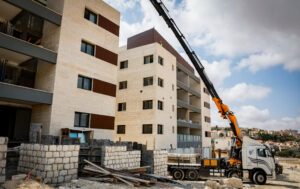
According to the ministry, about 40 new settlement points are now being established along the border. These communities will include armed civilians as part of a broader security framework.
Baram said the Eastern Region Directorate was created to promote an inter-ministerial framework that brings all state capabilities to Israel’s longest border region.
A Developing Threat From The East
Baram warned that Iran’s and its proxies’ “plan for the destruction of Israel” has weakened during the war. However, he said Israel must still prepare for the future.
Looking ahead, he warned that “a raid from the east is a developing threat.”
The Defense Ministry has identified the eastern region as a vulnerability more serious than any other border, according to Baram.
The defense establishment is investing major resources in a multi-layered defense system along the frontier. However, Baram said military systems alone will not be enough.
He called for a complementary civilian initiative that would build transportation, energy, communications, industry, agriculture, health, education, and settlement infrastructure.
The goal is to strengthen the region and bring tens of thousands of new residents to it.
Impact For Israel And America
For Israel, the eastern border plan reflects a lesson of October 7: empty or weak border areas become strategic vulnerabilities.
Israel cannot rely only on fences, sensors, and patrols. It also needs strong civilian life, armed readiness, and infrastructure that anchors the state along vulnerable frontiers.
For the United States, the plan matters because Israel’s eastern border is part of the wider regional map. Iran seeks influence through Iraq, Syria, Lebanon, Gaza, Yemen, and other fronts.
A stronger Israeli eastern frontier helps protect a key U.S. ally. It also supports regional stability, strengthens deterrence against Iranian-backed forces, and reduces the chance that Washington will face another sudden Middle East crisis.
The United States and Israel also share a covenantal understanding before God. Both nations, at their best, see liberty as a moral calling, not only a political system.
In this story, that shared calling means building free communities where enemies seek weakness. It means defending families, farms, roads, and schools, not only military bases.
For Israel, that duty includes settling and securing the land so Jewish life can endure under threat. For America, it includes standing with an ally that carries the frontline burden against Iran’s regional network.
The Defense Ministry’s eastern border plan is therefore more than a local infrastructure project. It is a strategic answer to a changing threat: stronger borders, stronger communities, and a clearer message that Israel will not leave its vulnerable regions exposed.
For more stories on Israel, faith, and the values behind the headlines, follow Sinai on Facebook and Instagram.
Discussion0
No comments yet — be the first to share your thoughts.