Disarmament in Name Only: Israel Says Hezbollah Still a Major Threat
The Prime Minister’s Office responded Thursday to a statement by the Lebanese Armed Forces claiming that Hezbollah has been disarmed in southern Lebanon, stressing that despite some efforts, the terror organization remains heavily armed and is actively seeking to rearm with Iranian support. Earlier in the day, the Lebanese Army announced that it had achieved

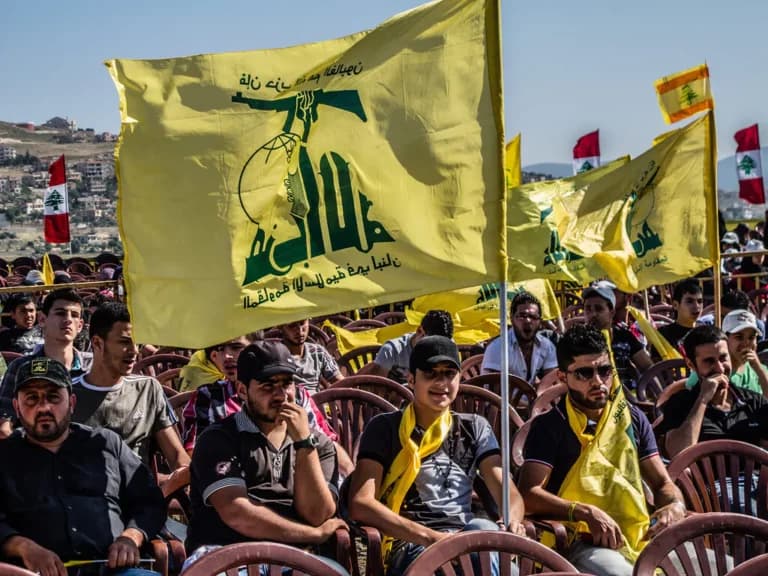
The Prime Minister’s Office responded Thursday to a statement by the Lebanese Armed Forces claiming that Hezbollah has been disarmed in southern Lebanon, stressing that despite some efforts, the terror organization remains heavily armed and is actively seeking to rearm with Iranian support.
Earlier in the day, the Lebanese Army announced that it had achieved its objective of dismantling Hezbollah’s weapons infrastructure in the south of the country, adding that the only exception involved limited areas it described as still under “Israeli occupation.”
Israel rejected this assessment. In a statement, the Prime Minister’s Office said that the ceasefire agreement brokered by the United States between Israel and Lebanon “states clearly, Hezbollah must be fully disarmed. This is imperative for Israel’s security and Lebanon’s future”.
“Efforts made toward this end by the Lebanese Government and the Lebanese Armed Forces are an encouraging beginning”, the statement continued, “but they are far from sufficient, as evidenced by Hezbollah’s efforts to rearm and rebuild its terror infrastructure with Iranian support”.
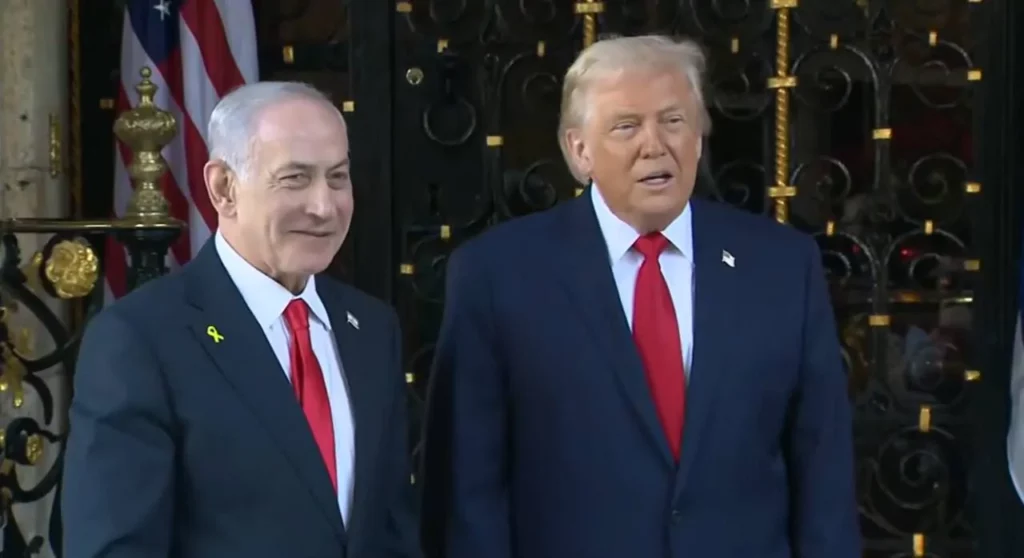
The comments come amid heightened regional tension, following Prime Minister Benjamin Netanyahu’s remarks to cabinet ministers that Israel has received a “green light” from U.S. President Donald Trump to carry out military action in Lebanon if necessary. According to reports, Israel’s defense establishment has been finalizing operational plans in recent weeks, based on intelligence assessments that Hezbollah continues to strengthen its military capabilities, despite the ceasefire understandings reached after Netanyahu’s December meeting with Trump in Florida.
Israel-Lebanon Ceasefire
The current ceasefire arrangement between Israel and Lebanon, brokered by the United States with international backing, is built on the principle that Hezbollah must be fully disarmed and removed from southern Lebanon, particularly from areas south of the Litani River. Under the agreement, the Lebanese government, through the Lebanese Armed Forces, bears responsibility for enforcing this disarmament, preventing Hezbollah’s military presence, and ensuring that the border region is not used for attacks against Israel. In return, Israel committed to halting its military operations (only responding to immediate threats), and to addressing disputes through a ceasefire monitoring mechanism. An international oversight committee, including representatives from Israel, Lebanon, the United States, France, and UNIFIL, was established to verify compliance.
On Wednesday, the ceasefire oversight committee convened with the participation of military representatives from Israel, Lebanon, the United States, and France, along with the commander of UNIFIL. Lebanese representatives reportedly presented a report detailing Israeli strikes along the border, as well as steps taken by the Lebanese Army to dismantle Hezbollah weapons sites.
Israeli officials said Jerusalem is still awaiting concrete decisions from the Lebanese government on the next phase of Hezbollah’s disarmament, noting the absence of clear timelines or an agreed geographic framework. They warned that meaningful action remains lacking – contrary to Lebanon’s ceasefire commitments. Israel maintains that its targeted airstrikes advance, rather than undermine, the goal of disarmament and expects Hezbollah’s weapons to be dismantled throughout Lebanon, not only south of the Litani River, in full accordance with the ceasefire agreement.
The committee is expected to meet again next week, with the participation of the U.S. ambassador to Lebanon, Michel Issa, who is slated to assume responsibility for the Lebanese portfolio.
The Foreign Ministry echoed these concerns, stating that extensive Hezbollah military infrastructure still exists south of the Litani River and releasing video footage to illustrate its claims.
Despite the statements published today in Lebanon, the facts remain that extensive Hezbollah military infrastructure still exists south of the Litani River. The goal of disarming Hezbollah in southern Lebanon remains far from being achieved.
This can be seen in the attached… pic.twitter.com/NPTIEbUapQ— Israel Foreign Ministry (@IsraelMFA) January 8, 2026
Hezbollah as a Threat
Hezbollah is widely regarded as the most heavily armed non-state terror organization in the world. Backed, trained, and funded by Iran, the organization has spent decades building a vast military infrastructure inside Lebanon, often embedded within civilian villages, homes, and religious sites – turning much of southern Lebanon into a forward operating base against Israel.
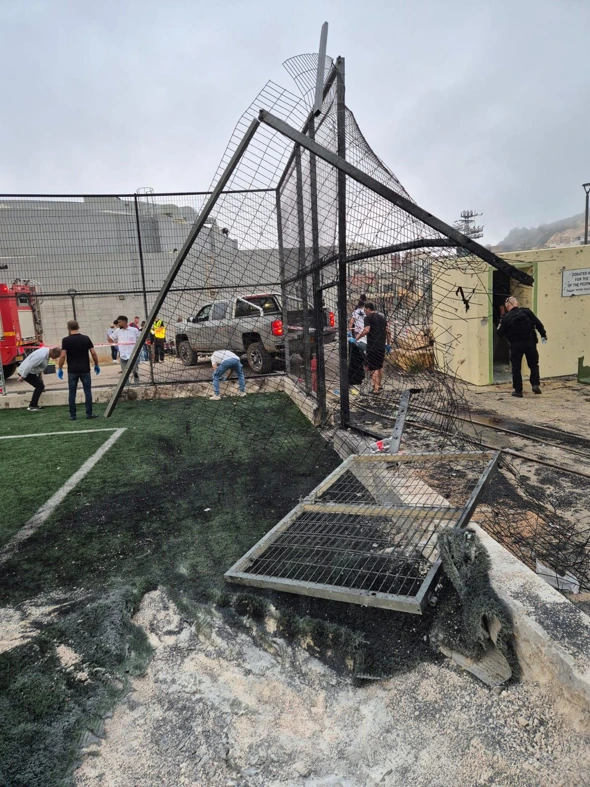
On October 7, as Hamas launched its unprecedented assault on southern Israel, Hezbollah opened fire along Israel’s northern border in solidarity. Since that day, Hezbollah has carried out sustained hostilities against Israel, including rocket and anti-tank missile fire, drone launches, and sniper attacks targeting both military positions and civilian communities in the north. These attacks forced the widespread evacuation of tens of thousands of Israeli residents from border towns and repeatedly risked triggering a wider regional war. The deadliest incident occurred when a Hezbollah rocket struck a soccer field in the Druze town of Majdal Shams, killing twelve children.
In recent months, tensions have intensified as Hezbollah increased cross-border provocations, surveillance activity, and attempts to rebuild sites previously targeted by Israel.
In an additional statement, the Israel Foreign Ministry acknowledged Lebanon’s decision in principle to address Hezbollah’s disarmament and some of the efforts made by its security forces, but stressed that these efforts remain limited. Hezbollah, the statement said, continues to rearm with Iranian assistance – underscored by the visit of Iran’s foreign minister to Lebanon on Thursday – and is rebuilding its capabilities faster than it is being dismantled.
According to IDF assessments, Israel may be required to act with significant force in Lebanon in order to dismantle Hezbollah’s full range of military capabilities. The Israel Defense Forces have completed operational planning for a potential strike, which would involve extensive activity similar to operations carried out over the past year.
“Though an army besiege me, my heart will not fear; though war break out against me, even then I will be confident” (Psalm 27:3 NIV).
Discussion0
No comments yet — be the first to share your thoughts.