

Photo: Shutterstock
Blessings Before and After Eating
The blessings before eating were created by the rabbis in the Talmud in a somewhat ‘matter of fact’ logical conclusion, saying that if we bless God after our meal, how much more so should we bless Him before eating! The rabbis expand this idea and suggest that one who eats without blessing God is akin to stealing from God (Talmud Bavli Berachot 35a)! Therefore, every time we prepare to put something in our mouth we first acknowledge the source of the food, we ask for permission to partake in God’s creations and to become a partner in creation.
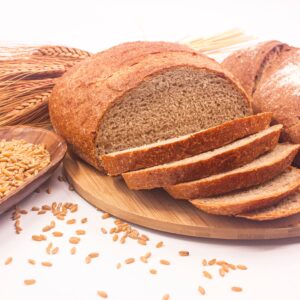
This idea is most strongly manifest in the joint efforts of making bread. We take God’s raw material of wheat and through a complicated process turn that into delicious and life sustaining bread. For this reason, we recite the blessing, ‘Hamotzi lechem min haaretz’ (God brings forth bread from the earth). It is interesting to note that it does not say ‘God brings forth wheat from the earth’, rather, bread. The rabbis, I believe, were alluding to the partnership between God’s creating and man’s enhancing as God provides the raw material and we turn it into delicious bread.
A story in the Midrash (Tanchuma, Tazria 5) illustrates this point. Rabbi Akiva was approached by an evil Roman senator with a claim against the Jewish notion of circumcision. His philosophical argument came in the form of a simple question: Whose deeds are greater, God’s or man’s? Rabbi Akiva was in a bind; if he answered the obvious, that God’s deeds are greater, Turnus Rufus would then counter with why do you perform circumcision? If he answered that man’s deeds are greater, isn’t that heresy?
In the end Rabbi Akiva surprisingly said man’s deeds are greater! To the astonishment of the Roman senator, Rabbi Akiva presented him with a stalk of wheat and a loaf of bread and asked him, what is greater? Rabbi Akiva was making the point that when man uses the raw materials that God provided and turns it into a most ideal state—that is the essence of the partnership between human beings and God.
Jewish blessings divide into three categories: blessings on mitzvot (commandments), blessings praising or thanking God, and blessings on things we enjoy in this world. The blessing on hamotzi (challah) belongs to the third category, acknowledging God for providing wheat to the world.
The blessing formula begins with:
“Blessed are you, God, our Lord, king of the universe”
For bread, it concludes with:
“who brings forth bread from the earth”
This formulation presents an interesting paradox. Unlike blessings for fruit (“who creates the fruit of the tree”) or vegetables (“who creates the fruit of the ground”), the blessing for bread doesn’t entirely reflect reality. God provides wheat, but humans transform it into bread through a complex process.
The seeming inaccuracy of this blessing highlights our partnership with God. While God provides the raw material, humans are instructed to use their knowledge and skills to create sustenance. This partnership is symbolized by the bread and the blessing we recite together as we begin our Shabbat meal.
The process of making bread, from planting and harvesting wheat to grinding flour and baking, represents human ingenuity and effort. Yet, by blessing the finished product as if it came directly from the earth, we acknowledge that all our abilities and resources ultimately come from God. This humbling recognition reminds us of our role as stewards of creation, tasked with improving and elevating the world around us.

Discussion0
No comments yet — be the first to share your thoughts.