
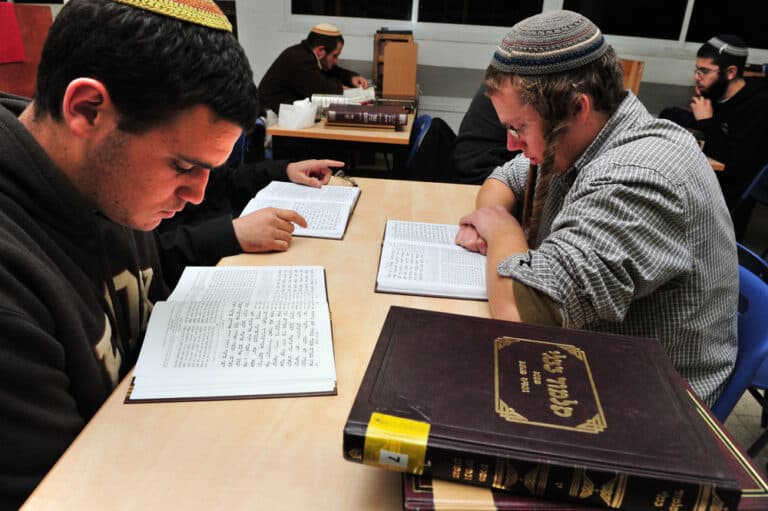

Studying Jewish sources in a Yeshiva Study Hall, Beit Midrash, in Hebrew. | Photo: Shutterstock
Moses and Jethro (Yitro, in Hebrew)
If Abraham represents the individual who is charged with God’s mission to enlighten the world about God, Moses is the national equivalent. Abraham’s plan of spreading the name of God worked for his generation, through his encounters with Malki-Tzedek as well as Efron, Avimelekh, Mamre and Pharaoh, yet he was only one (two together with Sarah) and their reach was short, their call faint. Abraham’s legacy continued with Yitzhak and developed with Yaakov and the twelve tribes, yet abruptly ends with descent to Egypt and a new king who no longer knows about God.
Moses represents the nation of Israel. It is he who leads the people out of slavery, but more importantly towards Sinai and an understanding of their mission in the world—to continue the legacy of Abraham, go to the land, and call out in God’s name! Moses, through his defiance of Pharaoh, his leadership of the Israelites, his song at the splitting of the sea, and his role as defender of the nation and as teacher of the people, took the baton from Abraham and called out in the name of God. Did anyone hear?
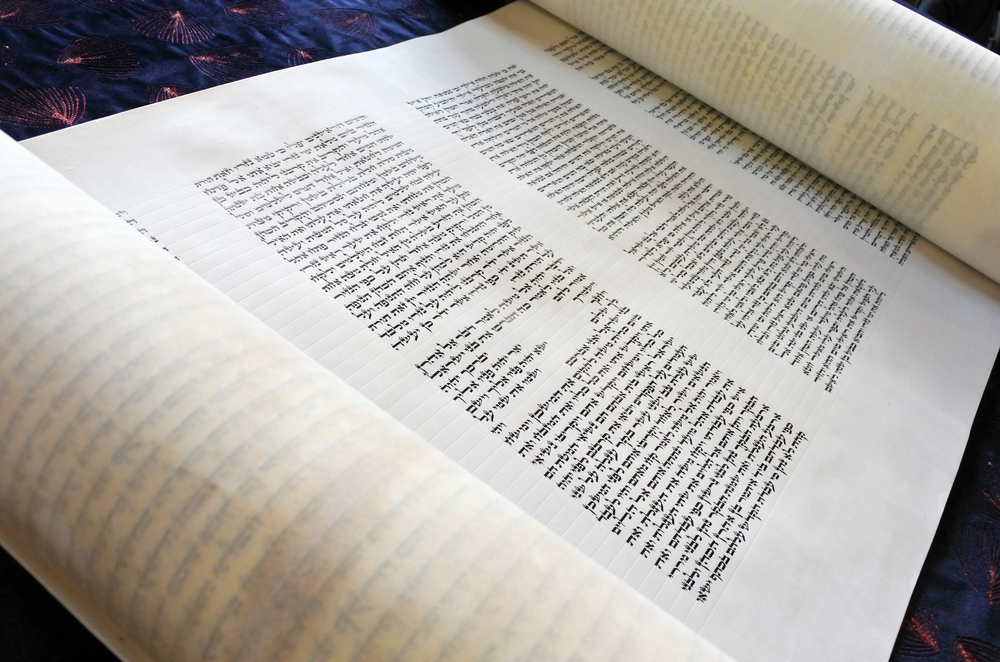
(1) Jethro priest of Midian, Moses’ father-in-law, heard all that God had done for Moses and for Israel His people, how the LORD had brought Israel out from Egypt. (5) Jethro, Moses’ father-in-law, brought Moses’ sons and wife … (8) Moses then recounted to his father-in-law everything that the LORD had done to Pharaoh …. (9) And Jethro rejoiced over all the kindness that the LORD had shown Israel … (10) “Blessed be the LORD,” Jethro said, “who delivered you from the Egyptians and from Pharaoh, …. (11) Now I know that the LORD is greater than all gods, …” (12) And Jethro, Moses’ father-in-law, brought a burnt offering and sacrifices for God; and Aaron came with all the elders of Israel to partake of the meal before God … (13) Next day, Moses sat as magistrate among the people, while the people stood about Moses from morning until evening. (Exodus, 18)
“Blessed is the Lord”
Yitro hears! He hears of God’s salvation, of the Exodus, and of the miraculous birth of the nation of Israel. He hears and he comes! True, he brings Tzipporah and Moshe’s sons, yet the thrust of his visit is not personal or familial but national and religious. He hears of the miracles, and feels the need to come to the Israelite camp. There he says the magical words which prove that the nation of Israel is on the right track—”barukh Hashem (blessed is the Lord) who delivered you from Pharaoh…now I know that the Lord is greater than all other gods…” Yitro, in addition to his declaration and blessing, also offers sacrifices and joins the Israelites in a festive meal. The next morning, Yitro observes the judicial system and then offers some advice to Moshe and Israel on how to more efficiently adjudicate. After his extremely positive experience, Yitro goes home.
I believe Yitro went home to Midian and spread to his people the message of the greatness of the God of the Hebrews and the miracles with which He redeemed His nation. Yitro stayed a Midianite priest, but his consciousness was forever altered in that he understood that the Israelites are indeed a blessed nation due to their unique position in God’s plan. The children of Israel continue their journey without Yitro’s guidance (Bamidbar 10:29-32), and the eleven day march detours for close to forty years. But at the end of the Torah, the second generation is poised to fulfill the second half of the mission God planned so many years before: ascending to the Promised Land (Exodus 3:8).

Discussion0
No comments yet — be the first to share your thoughts.