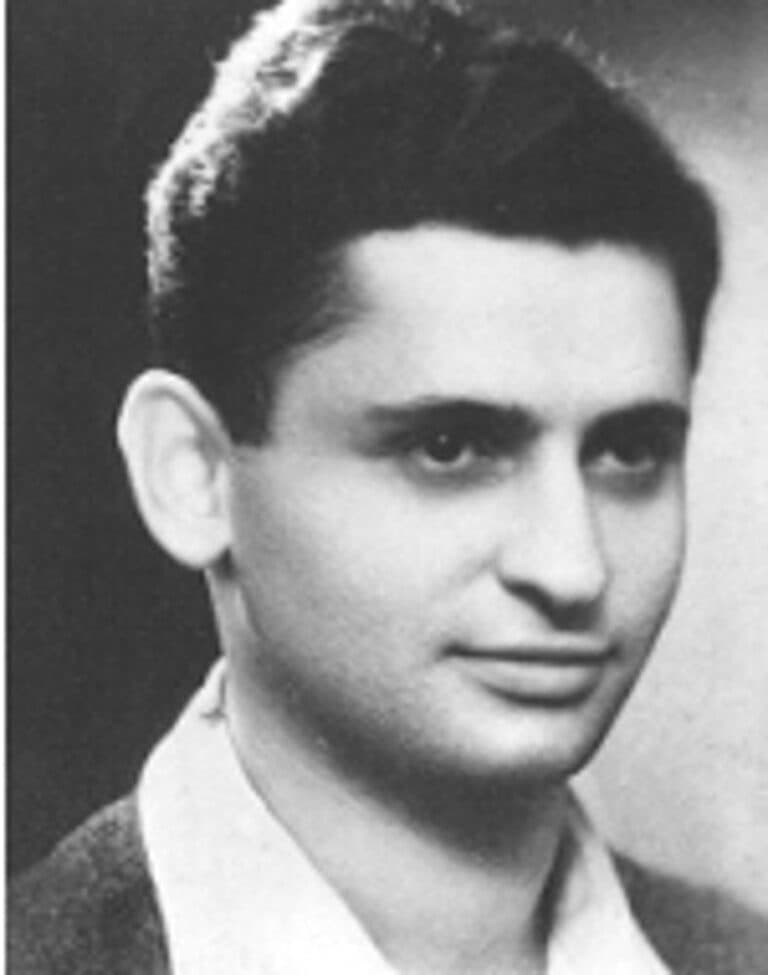

Shlomo Haimson, born in Romania, 1930, killed in a internment camp in Cyprus, 1948 | Photo: Israel Defense Forces
- A father died running. Shlomo Haimson was shot escaping a British camp to reach his newborn daughter in Israel.
- 78 years unmarked. His grave sat unidentified in Cyprus, then Haifa, until 2023.
- 50,000+ refugees interned. Britain held Jewish immigrants across Cyprus camps from 1946 to 1949.
- Trained behind wire. Shlomo joined the Haganah’s “Defenders’ Ranks” inside the camp itself.
- Amos 9:14 fulfilled. His story echoes the prophecy of Israel rebuilding what was lost.
Seventy-eight years is a long time to wait for a name. That’s how long it took the State of Israel to identify the grave of Shlomo Haimson, an 18-year-old refugee shot by British guards while trying to escape a detention camp in Cyprus. He was running toward his newborn daughter, waiting for him in the young State of Israel. His story carries the kind of courage that built a nation.
A Refugee’s Dream of Home

Shlomo was born in Romania in 1930 and lost his father in the Holocaust. Like thousands of survivors, he boarded the Pan York, one of the “illegal” immigration ships smuggling Jewish refugees toward the Land of Israel after the war. The British (UK Royal Navy) intercepted more than 50,000 Jewish refugees between 1946 and 1949, holding them in camps across Cyprus rather than letting them land. Shlomo, his mother Ita, and his girlfriend Perla were among them, sent to the Karaolos camp in Famagusta, Cyprus.
📖 Read here to discover the truth about why copies of Hitler’s Mein Kampf were found in Arabic in Gaza.
Behind British Wire
Even behind barbed wire, Shlomo trained with the “Defenders’ Ranks,” a Haganah-run group preparing detainees to fight for Israel’s future. When the state was declared in May 1948, his mother and Perla were released and helped found Kibbutz Magen. Shlomo stayed behind bars, still dreaming of the land he’d never seen.
A Daughter Born, A Father’s Race
In September 1948, word reached the camp that Shlomo had become a father. His daughter, Miriam, had been born in Israel. Four days later, on the night of September 29, Shlomo and eight fellow detainees broke through the camp fences. British guards opened fire, and Shlomo fell on the spot, killed while running toward the child he never held. His friends were caught and returned to the camp. The next day, British authorities buried him in the Jewish cemetery in Margo, Cyprus, his grave left unmarked.
The Search That Took 78 Years
In 1970, Israel exhumed 163 graves from Margo in an effort known as Operation Margo, reburying the remains in a special section of Kfar Samir Cemetery in Haifa, Israel marked simply “unknown.” In 2023, the IDF’s Missing Persons Branch teamed up with the Military Rabbinate and the Association of Jewish Prisoners in Cyprus to trace Shlomo through archival records, old photographs, and witness testimony. Their work led them to grave 11, row 2. After 78 years, Shlomo Haimson finally had his name back.

What Shlomo’s Story Means Today
What would it take for a young father to run through gunfire toward a child he’d never met? For Shlomo, the answer was simple: Zion was worth it. The prophet Amos captured that same longing centuries earlier: “I will bring my people Israel back from exile… they will rebuild ruined cities and live in them” (Amos 9:14).
Shlomo never got to rebuild anything himself. But his daughter did, and so did the nation he died reaching for. His grave has a name now. His story deserves to travel further than a Haifa cemetery, carried by anyone who believes that the return of the Jewish people to their land was worth every sacrifice it demanded.
Want to keep reading? Find out which 20 Pro-Israel Influencers you should follow today. Explore more on faith, values, and the Land of Israel at Sinai Project.
Discussion0
No comments yet — be the first to share your thoughts.