
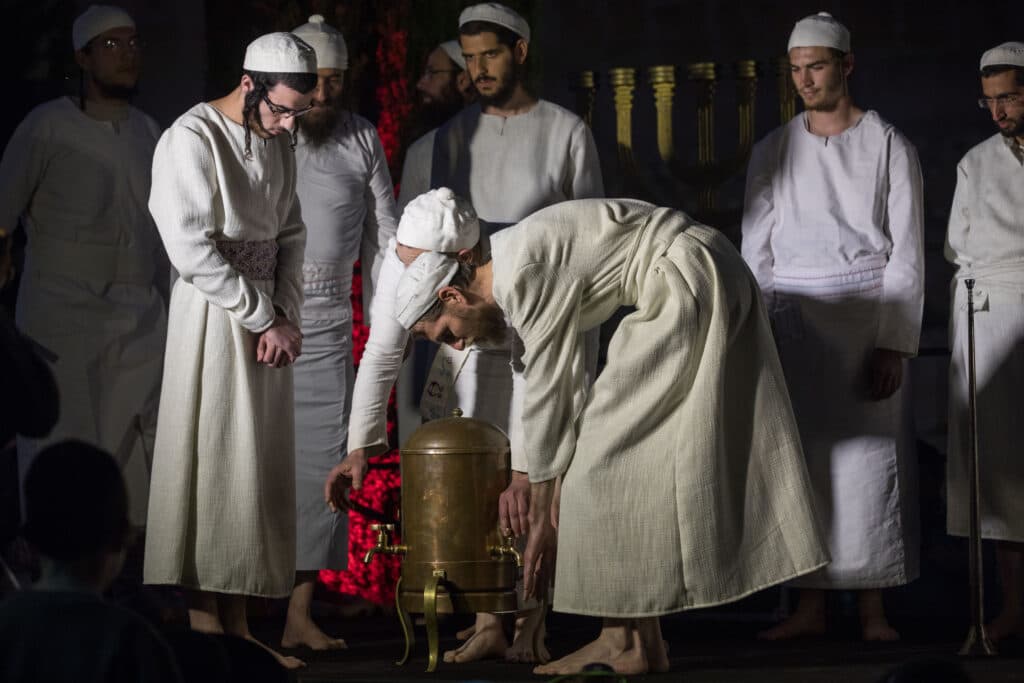

Cohanim perform a Passover Sacrifice ‘practice’ ceremony at Davidson Center in Jerusalem Old City. | Photo by Yonatan Sindel/Flash90
Rise Up: Elevating the Soul Through Devotion
The concept of a burnt offering, known as the olah in Hebrew, holds profound significance in ancient religious practice and spiritual thought. It symbolizes the ultimate act of devotion—giving everything to the divine. While rooted in Jewish tradition, its universal themes of surrender, commitment, and elevation resonate across cultures and beliefs.
What is the Olah?
The olah derives its name from the Hebrew root ע-ל-ה (alah), meaning “to ascend.” This offering was entirely consumed by fire on the altar, with no portion left for human consumption. Its complete burning represented total dedication—an act of giving oneself wholly to God. The placement of the olah at the forefront of Leviticus (the biblical book detailing sacrificial laws) underscores its prominence as a model for divine service. It teaches that true devotion requires not partial commitment but a willingness to offer one’s entire self—thoughts, actions, and intentions.
In early English translations of the Bible, the olah was rendered as “holocaust,” a term derived from Greek words meaning “wholly burnt.” While this word has taken on tragic connotations in modern history, its original usage highlighted the completeness of this offering. The olah was not merely a ritual; it was an act of profound surrender, embodying the idea that everything we possess ultimately belongs to God.
Daily Devotion: The Tamid Offering
One of the most significant applications of the olah was the daily offering (tamid), brought every morning and evening in ancient temples. This simple sacrifice—a lamb accompanied by flour and wine—was described by one rabbi as encapsulating “the most important verse in Scripture.” Its modest nature demonstrated that devotion is not about grandeur but consistency and sincerity.
The tamid teaches us a timeless lesson: serving God (or striving for spiritual elevation) is not about occasional grand gestures but steady, unwavering commitment. Just as this offering marked both the beginning and end of each day in ancient practice, so too can daily acts of prayer, reflection, or kindness frame our lives with meaning and purpose.
A Story of Ultimate Sacrifice
The olah also evokes memories of one of history’s most profound stories: Abraham’s willingness to offer his son Isaac as a burnt offering (Akedat Yitzchak). This narrative is often seen as a paradigm for faith and devotion. Abraham’s readiness to give up everything for God exemplifies trust in divine will and serves as a reminder that true commitment often requires self-sacrifice.
Interestingly, certain offerings were required to be slaughtered on the northern side of the altar—a detail connected by Jewish sages to Isaac’s binding. The north represents divine justice (gevurah), reflecting Isaac’s submission to God’s will. Thus, every burnt offering served as a reminder of this foundational act of devotion.
Elevating Thoughts and Intentions
The word olah carries additional layers of meaning beyond its literal translation as “that which ascends.” Ancient interpretations suggest it also refers to human thoughts that “ascend” in one’s mind. Improper thoughts—such as selfishness or harmful desires—were seen as requiring atonement through symbolic acts like offerings.
One biblical verse (Ezekiel 20:32) states: “What rises in your spirit shall not come to pass,” referring to Israel’s desire to abandon God for idolatry. This highlights how internal struggles often shape external actions. The olah, then, serves as a reminder to align our thoughts with higher values and resist impulses that lead us astray.
Another interpretation views the olah not as an atonement for sin but as a gift (doron) to God—a voluntary act expressing gratitude or strengthening one’s bond with the divine. This perspective reframes devotion as an act motivated by love rather than guilt.
Lessons for Today
Although physical sacrifices are no longer practiced in most traditions, their spiritual lessons remain deeply relevant:
- Total Commitment: The complete burning of the olah teaches us to dedicate ourselves fully—not just through actions but also through our thoughts and intentions.
- Consistency: The daily offering reminds us that true devotion lies in regularity and constancy. Small but sincere acts performed consistently hold immense value.
- Mindfulness: By addressing improper thoughts through reflection or prayer, we can refine our inner selves and align our minds with higher values.
- Gratitude: Like Rava’s interpretation of the olah, we can view our daily practices—whether prayer, meditation, or acts of kindness—as gifts offered out of love and appreciation for life’s blessings.
Even without physical offerings like those described in ancient texts, we can bring an “offering” every day by dedicating ourselves to spiritual growth and service—through prayer, study, acts of kindness, or self-reflection. These modern expressions echo the spirit of the burnt offering, reminding us that our lives are gifts meant to be elevated toward something greater than ourselves.
Conclusion
Whether viewed as an act of surrender, gratitude, or devotion, the burnt offering remains a powerful symbol of what it means to rise up—to elevate oneself spiritually by dedicating every thought, word, and deed to higher purposes. May we strive each day to live lives worthy of being described as offerings ascending toward heaven.

Discussion0
No comments yet — be the first to share your thoughts.