Families Wait, a Nation Remembers
Prime Minister Benjamin Netanyahu spoke with the family of the fallen hostage, Staff Sergeant Ran Guvaili (of blessed memory), and with Thailand’s ambassador to Israel regarding the foreign fallen hostage, Suthitsak Rintalak (of blessed memory).

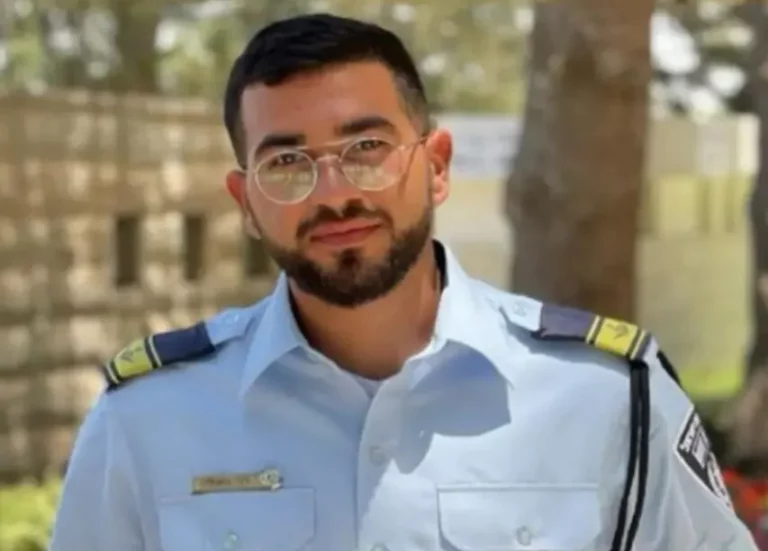
Prime Minister Benjamin Netanyahu spoke yesterday (Friday) with the family of the fallen hostage, Staff Sergeant Ran Guvaili, a heroic special police unit fighter who fell in battle defending Kibbutz Alumim and was taken captive into the Gaza Strip on October 7, 2023.
“Astonishment and Endless Pride”
Ran is the only Israeli fallen hostage still being held by terror organizations in Gaza. The Prime Minister provided his parents, Talik and Itzik, with details about the efforts Israel is undertaking to bring him back and about his firm resolve to lay him to rest in the soil of Israel.
The Prime Minister expressed his deep appreciation for the Guvaili family for their values, dignity, and national strength. He said that Rani’s courage and his fall in battle fill him, his wife, and the entire people of Israel with pain, astonishment, and endless pride.
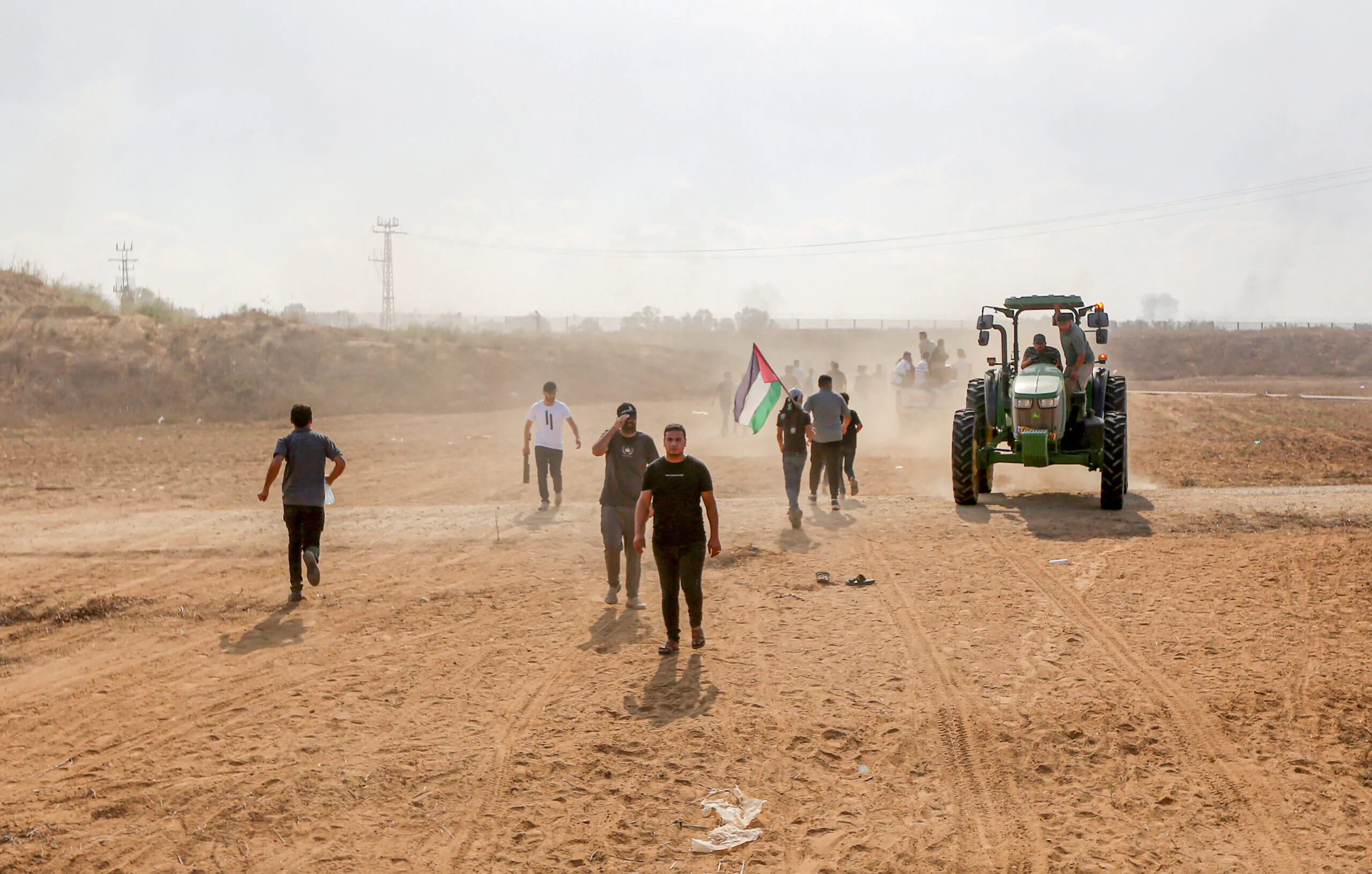
The Morning of October 7; Photo: Yousef Mohammed / FLASH90
The Guvaili family expressed their appreciation to the Israel Defense Forces, the security forces, the Hostages and Missing Persons Directorate, and to the Prime Minister for the determination to return all the captives. They expressed hope that their son Rani would be returned soon.
Ran Guvaili’s mother, Talik, told Ynet after the call with Prime Minister Netanyahu:
“He promised us that he will continue the efforts until the very last hostage, that he is not letting go. Huge efforts are being made continuously; it was a very clear promise.”
She added:
“I asked that they not move on to the second stage until they are returned, and he said they are fully on it. From my impression, he intends to bring him back; he was very clear and decisive. It is important to me to say: Do not forget Rani and Suthitsak.”
“Many Efforts Are Underway”
Later, the Prime Minister spoke with the Thai Ambassador to Israel, Boonrith Wicheanphan, and updated him on efforts to return the fallen hostage Suthitsak Rintalak, a Thai citizen also being held by terror organizations in Gaza.

Suthitsak Rintalak; Photo: Courtesy of the family
The Prime Minister stated that the Government of Israel, the Hostages and Missing Persons Directorate, and the security forces are making extensive efforts to return him, and that Israel’s support for the families of deceased and surviving Thai hostages will continue.
During the conversations, which included the Coordinator for Hostages and Missing Persons, Brigadier General (Res.) Gal Hirsch, the Prime Minister reiterated that the State of Israel is committed to returning all the hostages — to the very last one.
Returning fallen hostages is a Jewish Obligation
For Israel, the question of hostages is never only diplomatic or military. It is civilizational.
Among the deepest values in Jewish tradition is the obligation to bring the dead to burial. Burial is not regarded merely as an act of closure, but as an act of dignity, repair, and covenantal duty. To be denied burial is considered a profound violation not only of personal dignity, but of collective memory itself. The dead are not “past” in Israel’s national consciousness; they remain part of the living fabric of the nation until they are laid to rest among their people.
This is why the term fallen hostage carries such extraordinary weight. It represents not only a family’s unresolved mourning, but a nation’s sense that something sacred remains suspended.
Israel carries historical trauma in this space.
The most famous and painful example is that of Ron Arad, the Israeli navigator shot down over Lebanon in 1986 and captured by hostile forces. For years, Israel pursued fragmentary leads, prisoner exchanges, intelligence operations, and diplomatic channels in an effort to determine his fate. No body was returned. No grave was dug. His absence became a national wound that never completely healed.
To this day, Ron Arad symbolizes the unresolved — the soldier who never came home, the family that never received final truth, the nation that never placed a stone on a grave.
For many Israelis, his case taught that when a fallen captive is not returned, the damage does not fade with time. It deepens. It enters schoolbooks, memorial days, songs, and prayers. It becomes inherited pain.
It is within this historical memory that the current cases are unfolding.
The families of Ran Guvaili and Suthitsak Rintalak are not only waiting for loved ones. They are standing against the possibility of history repeating itself — against another name being added to a list Israel prayed would never grow again.
This is also why leaders speak in the absolute: “to the very last one.”
It is not rhetoric. It is doctrine.
In Jewish moral tradition, even the fallen enemy is entitled to burial; how much more so one’s own. The return of a body is not considered a concession — it is considered a restoration of moral order to a violently broken world.
For Israel, therefore, returning fallen hostages is not secondary to victory. It is part of what victory itself means. As the Bible tells us, “For there is hope for the captive… and your children shall return to their border.”
— Jeremiah 31:16–17 (adapted)
Discussion0
No comments yet — be the first to share your thoughts.